What to expect, week by week
Almost every family asks the same question in different words: what actually happens after we call? Here is the sequence, with the mystery taken out.
The first call
You reach a real person, describe what is going on, and get plain answers. If you want to talk it through with a clinician before deciding anything, you can book a free consultation with a BCBA. That conversation costs nothing and commits you to nothing.
Verification of benefits
Before anything is scheduled, we contact your insurance company and confirm what your plan actually covers. We are in-network with Aetna and Anthem, including Anthem HealthKeepers Plus, Virginia's Medicaid managed care plan, and we are TRICARE-certified for military families. Almost every other plan is out of network, and we will tell you that up front rather than let a surprise bill tell you later.
The in-home assessment
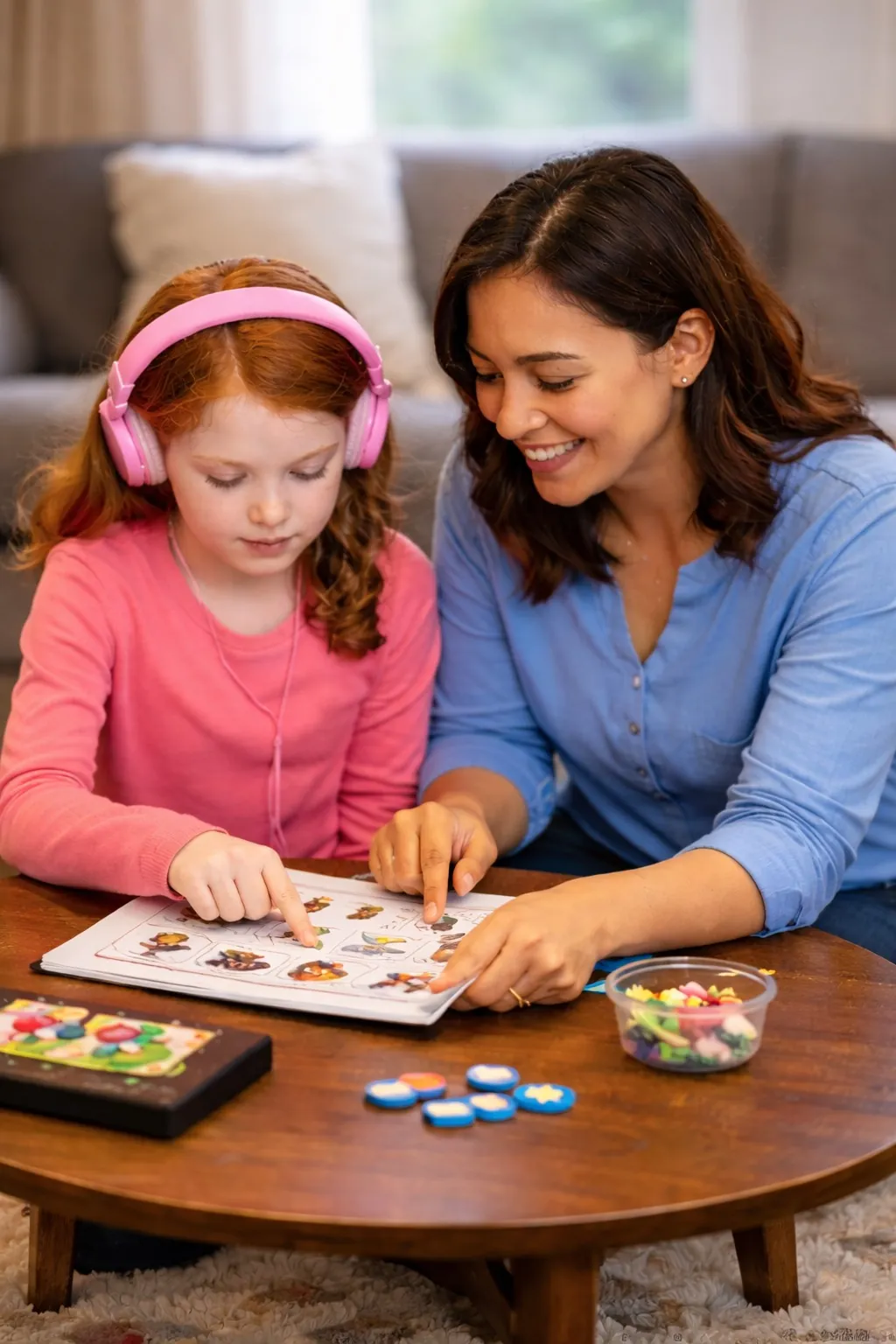
A BCBA comes to your home to meet your child where they are most comfortable. They observe, play, and talk with you about routines, strengths, and the hardest parts of your day, often using structured skills assessments to fill in the picture. This usually takes more than one visit, and that is a good sign; a plan built on one hour of observation is a guess.
The treatment plan
The BCBA writes an individualized plan: specific goals, how each one will be measured, and recommended weekly hours. We submit it to your insurer for authorization and advocate for the maximum services your child qualifies for. We do not quote an hour count before that work is done, because the honest answer depends on your child and your plan, not a brochure.
The first weeks of therapy
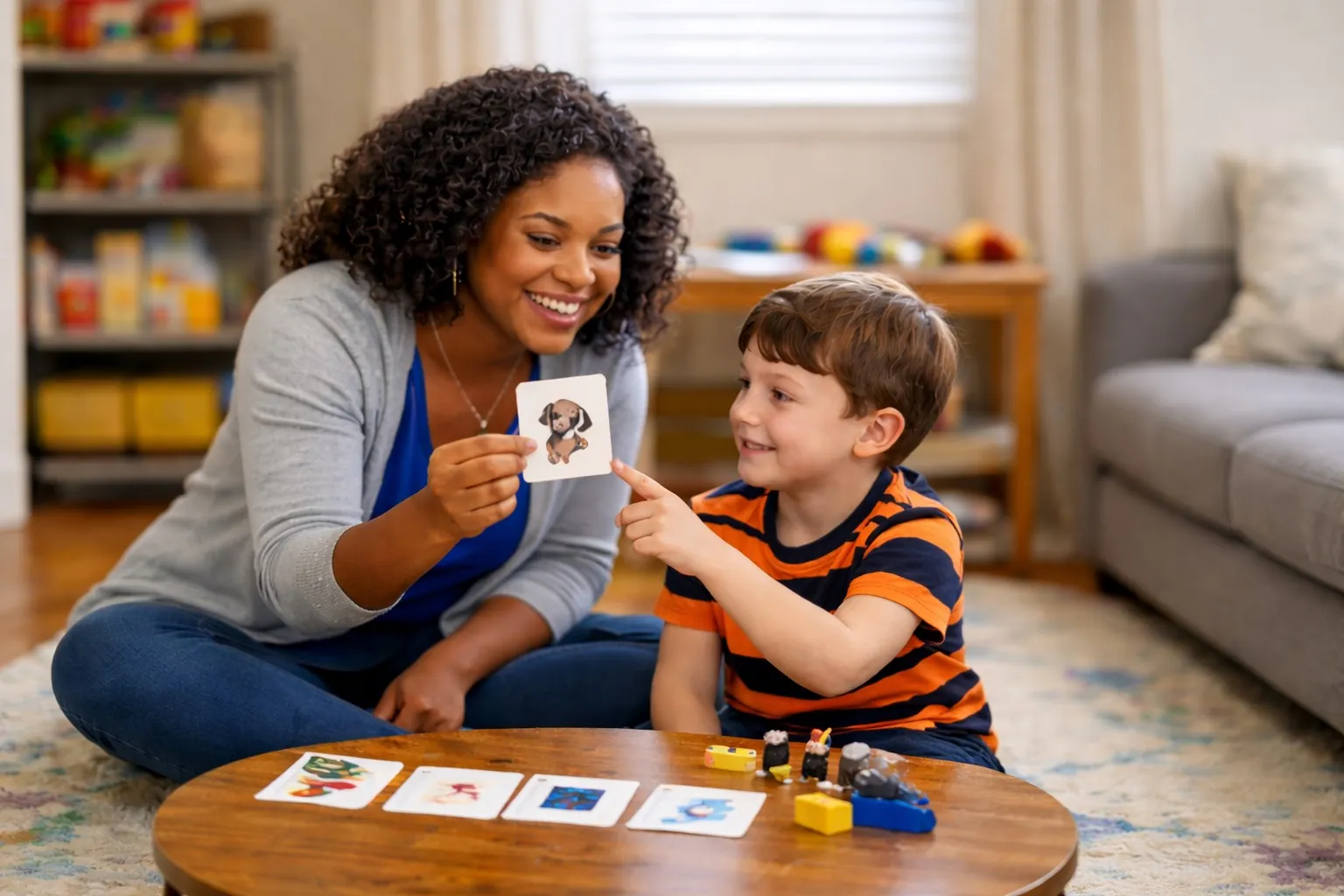
Early sessions are deliberately low-pressure. Your child's behavior technician spends the first visits on what the field calls pairing: becoming someone your child genuinely likes and wants to see. Teaching ramps up as trust builds. For most families, sessions settle into a comfortable rhythm within the first several weeks.
Ongoing BCBA oversight
Your child's program stays BCBA-supervised for as long as therapy runs. The BCBA reviews session data, observes sessions regularly, coaches the technician, and meets with you to talk through progress and adjust goals. Plans are formally reassessed for each insurance reauthorization, typically every six months, so the program keeps up with your child instead of trailing behind them.
What's inside your child's treatment plan
Most providers treat the treatment plan as internal paperwork. We think you should know exactly what's in it, because it is the blueprint for everything that happens in your home. Every Big Heart plan includes standardized assessments with names you will actually encounter (tools like the Vineland-3, SRS-2, VB-MAPP, and ABLLS-R), a functional behavior assessment for any behavior we are targeting, and goals that each carry a baseline, a measurable objective, and clear mastery criteria. Nothing as vague as "improve communication" ever goes in a plan.
The plan also includes a written safety protocol, a generalization plan so skills hold up at grandma's house and not just at your kitchen table, and formal caregiver goals, because your role is part of the clinical plan, not an afterthought. Your supervising BCBA reviews the plan continuously and modifies it as needed, with progress formally documented at least every 30 days, and the whole plan is reassessed for each insurance authorization cycle. And every plan includes something most families don't expect: a fade-out plan and discharge criteria. Good ABA is built to work itself out of a job.
In-home vs. clinic-based ABA, compared honestly
Both models can work well. The right one depends on your child and your family, so here is the trade-off laid out plainly.
| What it affects | In-home ABA | Clinic-based ABA |
|---|
| Where skills are learned | The kitchen, living room, and backyard where your child will actually use them | Therapy rooms set up specifically for teaching |
| Carryover to daily life | Usually immediate, because the setting never changes | Requires deliberate work to transfer skills home |
| Family involvement | Parents and siblings can watch, ask questions, and learn strategies live | Mostly updates at pickup and scheduled parent meetings |
| Peer interaction | Siblings and neighborhood kids, but fewer same-age peers on demand | Structured peer groups are often built in |
| Travel and scheduling | No commute; sessions fit around school, naps, and siblings | A drive both ways, within the center's hours |
| Structure and distractions | Real life, with real distractions we treat as teaching material | A controlled space with fewer competing variables |
Both columns are true at once. The question is which trade-offs matter most for your child, and that is worth an honest conversation on the first call.
Goals we actually work on at home
Goals come from your child's assessment, not a template. But parents ask what home-based goals look like in practice, so here are real examples of the kind we write.
- Communication: asking for help with a word, sign, or picture instead of crying; requesting a break before leaving the table; answering simple questions about their day.
- Daily living: tolerating tooth brushing and hair washing; getting dressed with less prompting; trying a new food without distress; steps toward independent toileting.
- School and learning readiness: following two-step directions during clean-up; staying with an activity for gradually longer stretches; moving between activities with a warning instead of a meltdown.
- Social and family life: taking turns with a sibling; staying at the table through a family meal; greeting visitors; playing alongside, then with, other kids.
Who in-home ABA is for, and who it isn't
In-home ABA fits families who want skills taught in the place they will be used, children who find transitions and new settings hard, and families far from the nearest center. It is not the answer to everything. If your child's biggest struggles happen at school, our in-school ABA support is built for that. If your child would benefit most from daily structured time with same-age peers, a clinic-based program may honestly serve you better, and we will say so. And while parent meetings can happen by video, therapy itself is in person; ABA is not something we deliver over a screen.
We provide in-home ABA therapy across all of Virginia, from Fairfax County to Richmond to Virginia Beach, and everywhere in between. We verify your benefits before therapy starts; see our insurance page for the plans we work with.

 🏡 Home-Based